From Long January to First Light: Celebrate St Brigid’s Day, Imbolc & Cooking Towards Spring


After what has, at times, felt like the longest January in living memory, today arrives with a quiet sense of relief. Back home in Ireland, the 1st of Feburary is St Brigid’s Day – Lá Fhéile Bríde marks that turning point. A day that honours the women of Ireland, and one I’m proud to count myself amongst.
Since 2023 it has been recognised as a national holiday, but long before that it lived in classrooms, kitchens and hedgerows. Growing up, we marked it by weaving St Brigid’s crosses from rushes at school – fingers clumsy at first, then suddenly capable. A small act of craft that carried something much bigger: continuity, care, and the quiet strength of women passing knowledge on.

In the depths of winter, spring is the light ahead – offering hope, renewal and abundance. In Ireland, its arrival has been celebrated down through the millennia. Imbolc, the ancient Celtic festival, marked the stretch in the evenings, the stirring of new growth, and a moment to pause, take stock and plan the year ahead.
In ancient Ireland, each season was marked by a great fire festival:
Imbolc in February, Bealtaine in May, Lughnasa in August and Samhain in October. Today, these ancient celebrations sit comfortably alongside Christian and modern traditions, reminding us that seasonal living never really left us – it simply went quiet for a while.

Starting Where We Are

Simon and I spent today preparing beds in our community garden. We’re both new to growing our own produce properly, having only dabbled last year. I was always fortunate to work in kitchens that employed gardeners, which meant I could enjoy the harvest without ever tending the soil myself. Simon although passionate about all things country and farming spent his working life driving tour coaches through Europe so he wasn’t home long enough to have a productive garden. Now we work together at Meg’s Scottish Kitchen so we can finally take another step towards our self sufficiency journey.
This year feels different.

It seems fitting that on St Brigid’s Day, aligned with the ancient celebration of Imbolc, we’re starting our garden adventure. We’re using the no-dig method favoured by Charles
Dowding, after Simon attended one of his workshops in Somerset in 2023. Feeding the soil, not fighting it. Trusting that good things grow when you work with nature rather than against it. Much like cooking, really.
February Food: Gentle, Grounding, Real

February cooking doesn’t shout. It whispers. Roots, stored fruits, oats, citrus – food that nourishes rather than distracts. This is the time of year when eating seasonally naturally helps edge ultra-processed food out of the kitchen. Not through restriction or rules, but because real food, cooked slowly, is genuinely satisfying.
Over the years, I’ve noticed that the more I cook like this, the less I crave packets and shortcuts. When food has depth and care built in, there’s simply no need for the extras.
Slow-Baked Celeriac with Thyme, Garlic & Oat Crumb
A winter root given star billing
Celeriac is one of those vegetables that asks for trust. Ugly as sin on the outside, but sweet, nutty and elegant when treated kindly. This is a dish I often serve as a main for lunch, or alongside roast chicken or baked fish.
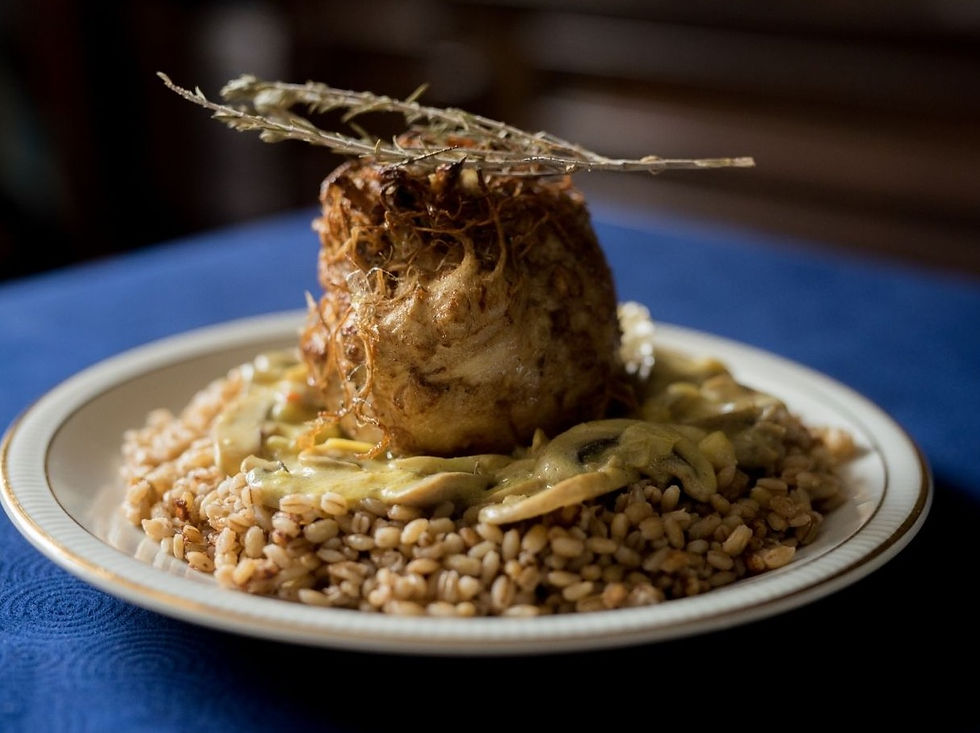
Serves 4
Ingredients
1 large celeriac
2 tbsp olive oil or melted butter
2 cloves garlic, finely sliced
A few sprigs of fresh thyme
Sea salt & black pepper
For the oat crumb
40g porridge oats
20g butter
1 tbsp grated mature Cheddar (optional but lovely)
Method
Heat the oven to 170°C (fan).
Peel the celeriac and slice into 1cm rounds. Lay them in a single layer in a buttered baking dish.
Drizzle with olive oil or butter, tuck in the garlic and thyme, season generously, and cover tightly with foil.
Bake for 1 hour until completely tender.
Meanwhile, melt the butter for the crumb, stir in the oats and toast gently in a pan until golden. Add the cheese if using.
Remove the foil, scatter over the oat crumb, and return to the oven uncovered for 15 minutes until lightly crisped.

Why this works in February
This is real, grounding food. No coatings, no hidden sugars, no “extras”. It’s comforting without being heavy and proves that simple ingredients, cooked slowly, beat anything from a packet when it comes to flavour and satisfaction.
A Quiet Cake for the Turning of the Year
Lemon & Thyme Olive Oil Cake
This is my idea of a February cake. Not iced or layered or overly sweet, but something you slice thinly and eat with a cup of tea while the light lingers just that little bit longer in the afternoon. This is the kind of cake that proves a point: real ingredients, used well, don’t need embellishment. No stabilisers, no flavourings, no long shelf life required – just a nourishing, honest bake that quietly replaces ultra-processed treats.

Serves 8–10
Ingredients
Zest of 2 unwaxed lemons
200g caster sugar
3 eggs
180ml fruity olive oil
200g plain flour
1½ tsp baking powder
1 tsp thyme leave
Method
Preheat the oven to 170°C (fan) and line a 20cm tin.
1. Using your fingertips to rub the lemon zest into the sugar until fragrant, this allows the natural oils in the zest to infuse into the sugar.
2. Add the eggs into the sugar and whisk in the olive oil.
3. Fold in the flour, baking powder and the thyme.
4. Bake for 40–45 minutes until just set. Cool fully and dust lightly with icing sugar.
Cooking as an Act of Hope

Imbolc reminds us that nothing stays frozen forever – not the soil, not our energy, not our kitchens. Whether it’s planting seeds, cooking from scratch, or choosing food that truly nourishes, this time of year invites us to begin again, gently.
Seasonal cooking doesn’t need perfection. It just needs attention.
Come Sit at the Table

If this way of cooking speaks to you, I’d love to welcome you further.
✨ Book seasonal catering rooted in Scottish and Irish food traditions
✨ Join a Thermomix demonstration and rediscover scratch cooking with ease
✨ Explore my cookbooks for nourishing, unfussy recipes
✨ Follow along on social media for seasonal cooking, growing and everyday kitchen life
Spring is coming. And as it always has, it begins at the table.


Comments